
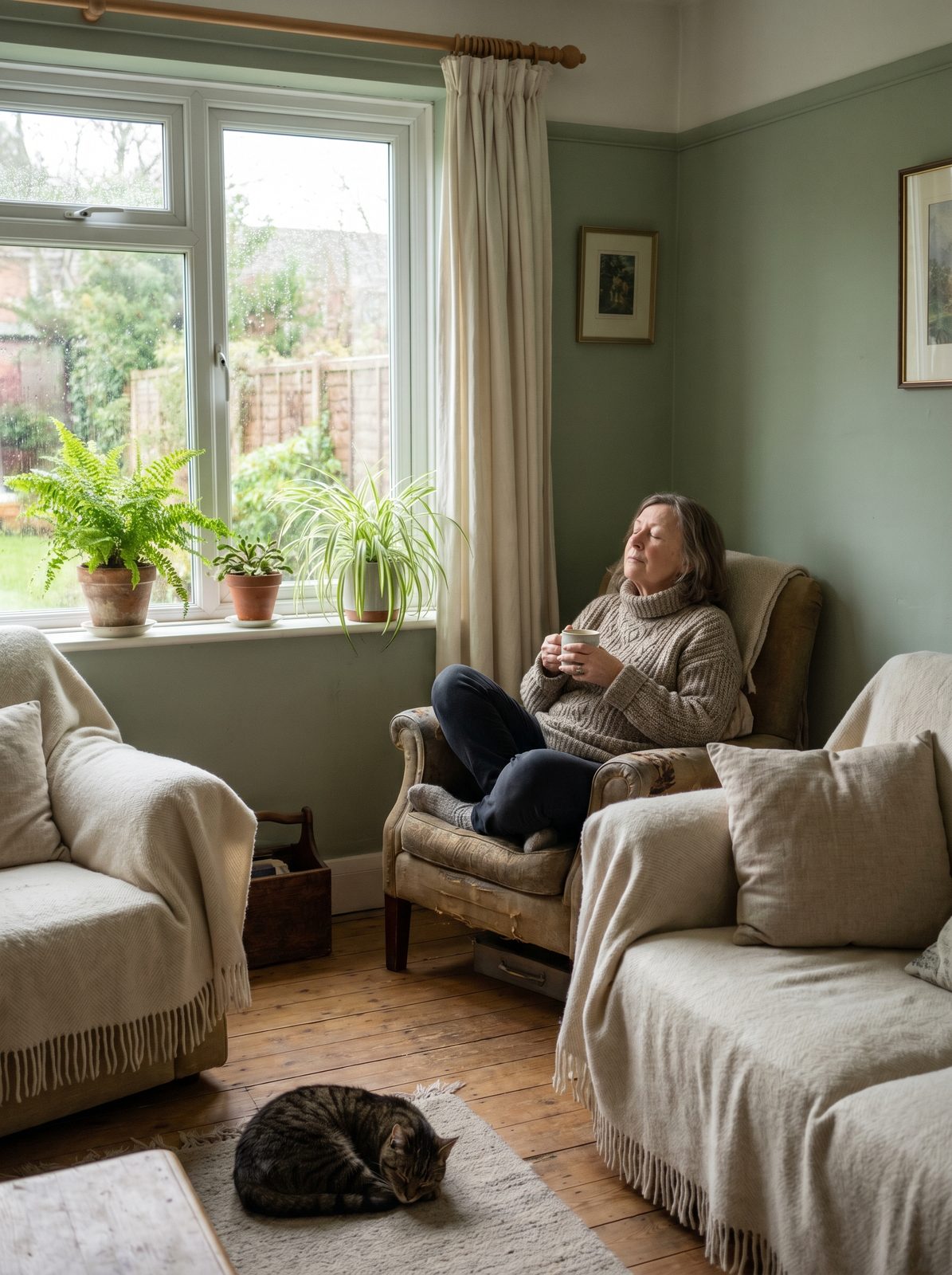
If you have ever felt your heart race over something small, or lain awake with your mind whirring, you are not on your own. Anxiety is one of the most common things people come to us about, and it can show up in all sorts of ways. A tight chest. A churning stomach. That sense of being on edge for no clear reason. The good news is there are small, kind things you can do most days that genuinely help. None of them are magic, and you do not have to do them all. Pick one or two and see how you get on.
First, a word about what anxiety actually is
Anxiety is your body trying to keep you safe. It is an old alarm system that fires up when it senses a threat. The trouble is, it cannot always tell the difference between a real danger and a worry about an email, a bill, or what someone thought of you. So it sets off the same response either way. Once you know that the racing heart and the racing thoughts are your body doing its job, even if it has got the wrong end of the stick, it can feel a little less frightening.
Slow your breathing down
When you feel anxious, your breathing usually gets quick and shallow without you noticing. Slowing it down is one of the fastest ways to tell your body it is safe. Try breathing in gently through your nose for a count of four, then breathing out slowly for a count of six. The longer out breath is the part that calms you. Do this a handful of times. It will not fix everything, but it often takes the sharp edge off, and you can do it anywhere, in a meeting, in the car, in a queue, and nobody will even know.
Name it out loud
There is something oddly settling about simply saying what is going on. Try naming it plainly to yourself: "I am feeling anxious right now." Or even, "This is anxiety, and it will pass." Naming the feeling gives you a tiny bit of distance from it. You stop being completely tangled up in it and start being someone who is noticing it. It sounds almost too simple, but a lot of people find that when they stop fighting the feeling and just name it, it loosens its grip a bit.
Come back to your senses
Anxiety loves to pull you into the future, into all the what ifs. One way back is to use your senses to land in the here and now. Look around and notice five things you can see, four you can hear, three you can touch, two you can smell, and one you can taste. It gives your busy mind a small, doable job and reminds it that, right now, in this moment, you are actually alright. Holding something cold, like a glass of water, or feeling your feet flat on the floor can work in the same way.
Lean on small routines
When life feels uncertain, a few steady habits give your day some handrails to hold. This does not mean a strict schedule that adds more pressure. It means small, kind anchors. Getting up around the same time. A proper breakfast. A short walk, even just round the block. Going to bed before you are running on empty. Cutting back on caffeine, which can quietly wind anxiety up without you realising. These little things add up, and on the harder days they give you something familiar to lean on.
Write the worry down
Worries always feel bigger swirling round your head than they do on paper. Try jotting them down, just as they come, no need to make them neat. Sometimes seeing a worry written out helps you spot whether it is something you can actually do something about, or whether it is a thought your mind keeps replaying. If there is a next step, write that down too. If there is not, you can gently set it aside for now. Some people like to keep a set worry time, ten minutes in the early evening, so the worries are not allowed to take over the whole day.
Talk to someone you trust
Anxiety often tells you to keep it all to yourself, that you are being silly or a burden. You are not. Saying how you really feel to a friend, a partner, or a family member can lift a surprising amount of weight. You do not need them to fix it. Just being heard, and hearing that you are not alone, makes a real difference. If saying it out loud feels too much at first, a text or a voice note can be an easier place to start.
Be kind to yourself on the wobbly days
Some days the tools work and some days they do not, and that is completely normal. Anxiety is not a sign that you are weak or doing life wrong. It is a very human thing that an awful lot of people live with. Talk to yourself the way you would talk to a good friend who was struggling. You would not tell them to pull themselves together. You would be gentle. Try offering yourself the same patience.
When it might be worth talking to someone
Everyday tips can take you a long way, but they are not always enough on their own, and there is no shame in that. It might be worth talking to someone if the anxiety is sticking around for weeks rather than passing, if it is getting in the way of work, sleep, relationships, or things you used to enjoy, or if you find yourself avoiding more and more to keep the feelings at bay. You do not have to wait until you are at breaking point. Reaching out when things feel manageable is a perfectly good reason too.
How talking therapy can help
Speaking to a counsellor gives you a calm, confidential space to understand what is feeding your anxiety and to find what works for you, at your own pace. Between us, Del and Sandra have nearly two decades of experience, and we use an integrative approach, which simply means we blend proven, practical ways of working around you rather than forcing you into one fixed method. There is no judgement here, and nothing you have to get right. We see people in person in Devon and online by video or WhatsApp wherever you are in the world, so working with us is not limited by where you live.
A gentle next step
If anything here has struck a chord, you are very welcome to start with a free 15-minute call. It is a relaxed, no pressure chat to see how you are doing and whether we feel like the right fit, with no obligation to book anything further. You can book your free call or simply send us a message on WhatsApp if that feels easier. Whenever you are ready, we would be glad to hear from you.
When you are ready, reach out.
Book a free 15-minute call or send us a message on WhatsApp. There is no pressure, just a friendly hello.
Devon-rooted, available wherever you are
We see people in person from our base in Teignmouth, Devon, and online right across the UK and the world. You do not need to live nearby, many of our clients meet us entirely over video or WhatsApp, from wherever feels comfortable. Tap an area to learn more.